
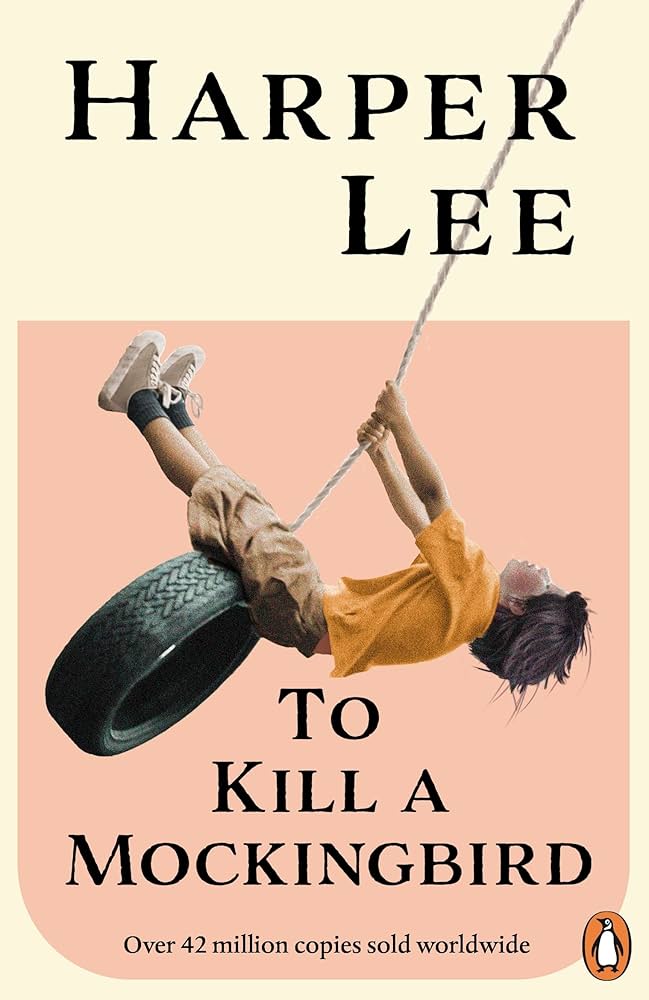
To Kill a Mockingbird
| Published | 1960-07-11 |
| Series | standalone |
| Genre | Southern Gothic, Literary Fiction |
| Language | English |
| Publisher | HarperCollins |
| ISBN-10 | 0060935464 |
| ISBN-13 | 978-0060935467 |
📝Honest Review
i read this for the first time when i was about fourteen and honestly i did not fully get it. i understood that it was about racism and injustice and that Atticus Finch was supposed to be one of the good ones, but the weight of it did not quite land the way it does now. i picked it up again a few years ago and something clicked that had not clicked before. it is a different book when you are old enough to understand what Atticus is actually up against.
the story follows Scout Finch, an eight year old girl in Maycomb, Alabama, during the 1930s Depression. her father Atticus is a lawyer who gets appointed to defend Tom Robinson, a Black man accused of raping a white woman. the accusation is obviously false to anyone paying attention, which is the point. most of Maycomb is not paying attention, or they are looking away deliberately, which amounts to the same thing.
what Harper Lee does that i think is genuinely hard to do is handle all of this through a child's eyes without making it feel simplified. Scout is smart but she does not understand everything she sees, and that gap between what she observes and what it actually means is where a lot of the real tension lives. you are reading her version of events while mentally processing the adult version simultaneously, and those two things rub against each other in a way that stays with you.
Atticus is the character everyone talks about and the praise is deserved but i also think he gets slightly flattened in the popular memory of this book. he is not a saint. he is a practical man who does the right thing because he cannot not do it, and there is a difference. the scene where he explains to Scout why he is taking the case, and what it would mean for him to walk away from it, is one of the better pieces of writing about moral obligation i have read anywhere. he is not heroic in the way films tend to depict heroism. he is just a person who has decided something and is going to live with the consequences of that decision.
the first half of the book is slower than the second. a lot of it is Scout and her brother Jem and their friend Dill messing around in the neighbourhood, obsessing over the mysterious Boo Radley who never comes outside, getting into small trouble, learning things about the town they live in without quite knowing they are learning them. some readers find this section too slow. i did the first time. i do not anymore because i understand now that Lee is building Maycomb deliberately, letting you settle into it the way Scout has settled into it, so that when the trial comes and the town shows its ugliest side it actually means something. you feel the betrayal because you have been living there too.
the trial itself is the heart of the book and it holds up. Tom Robinson is polite and honest and clearly innocent and it does not matter. the jury convicts him anyway. Lee does not soften this or find a way around it. the outcome is what you already know it is going to be and she makes you sit in that. Jem falls apart over it in a way that Scout does not fully understand yet, and that reaction from Jem is one of the most honest things in the book. it is the moment where a child starts to understand that the world does not work the way adults told him it did.
Boo Radley, who is mostly an absence for the first two thirds of the novel, becomes important in the final section in a way i found genuinely moving. the whole book is quietly about who the real mockingbirds are, the people who have done nothing wrong and get destroyed anyway, and Lee earns that idea rather than just stating it. when it pays off at the end it does not feel like a device. it feels like something the story was always going to arrive at.
the thing i want to say to anyone who has not read this yet is that it is not a comfortable book and it is not trying to be. it is easy to admire Atticus and feel good about admiring him and that is a trap Lee is aware of. the book knows that doing the right thing in Maycomb costs almost nothing compared to what Tom Robinson pays for being born in the wrong place at the wrong time. Atticus gets to go home. Tom does not. if you read this and come away only thinking about how great Atticus is, you have missed the more uncomfortable thing the book is asking you to sit with.
i would give it five out of five and i would recommend it to almost anyone. read it slowly. the first half rewards patience. and if you read it as a teenager and it did not fully land, read it again.
the story follows Scout Finch, an eight year old girl in Maycomb, Alabama, during the 1930s Depression. her father Atticus is a lawyer who gets appointed to defend Tom Robinson, a Black man accused of raping a white woman. the accusation is obviously false to anyone paying attention, which is the point. most of Maycomb is not paying attention, or they are looking away deliberately, which amounts to the same thing.
what Harper Lee does that i think is genuinely hard to do is handle all of this through a child's eyes without making it feel simplified. Scout is smart but she does not understand everything she sees, and that gap between what she observes and what it actually means is where a lot of the real tension lives. you are reading her version of events while mentally processing the adult version simultaneously, and those two things rub against each other in a way that stays with you.
Atticus is the character everyone talks about and the praise is deserved but i also think he gets slightly flattened in the popular memory of this book. he is not a saint. he is a practical man who does the right thing because he cannot not do it, and there is a difference. the scene where he explains to Scout why he is taking the case, and what it would mean for him to walk away from it, is one of the better pieces of writing about moral obligation i have read anywhere. he is not heroic in the way films tend to depict heroism. he is just a person who has decided something and is going to live with the consequences of that decision.
the first half of the book is slower than the second. a lot of it is Scout and her brother Jem and their friend Dill messing around in the neighbourhood, obsessing over the mysterious Boo Radley who never comes outside, getting into small trouble, learning things about the town they live in without quite knowing they are learning them. some readers find this section too slow. i did the first time. i do not anymore because i understand now that Lee is building Maycomb deliberately, letting you settle into it the way Scout has settled into it, so that when the trial comes and the town shows its ugliest side it actually means something. you feel the betrayal because you have been living there too.
the trial itself is the heart of the book and it holds up. Tom Robinson is polite and honest and clearly innocent and it does not matter. the jury convicts him anyway. Lee does not soften this or find a way around it. the outcome is what you already know it is going to be and she makes you sit in that. Jem falls apart over it in a way that Scout does not fully understand yet, and that reaction from Jem is one of the most honest things in the book. it is the moment where a child starts to understand that the world does not work the way adults told him it did.
Boo Radley, who is mostly an absence for the first two thirds of the novel, becomes important in the final section in a way i found genuinely moving. the whole book is quietly about who the real mockingbirds are, the people who have done nothing wrong and get destroyed anyway, and Lee earns that idea rather than just stating it. when it pays off at the end it does not feel like a device. it feels like something the story was always going to arrive at.
the thing i want to say to anyone who has not read this yet is that it is not a comfortable book and it is not trying to be. it is easy to admire Atticus and feel good about admiring him and that is a trap Lee is aware of. the book knows that doing the right thing in Maycomb costs almost nothing compared to what Tom Robinson pays for being born in the wrong place at the wrong time. Atticus gets to go home. Tom does not. if you read this and come away only thinking about how great Atticus is, you have missed the more uncomfortable thing the book is asking you to sit with.
i would give it five out of five and i would recommend it to almost anyone. read it slowly. the first half rewards patience. and if you read it as a teenager and it did not fully land, read it again.
Summary:
Set in Maycomb, Alabama during the 1930s Depression, the story follows young Scout Finch as her father Atticus, a lawyer, defends a Black man falsely accused of raping a white woman. Told through a child's eyes, it is a gripping account of racial injustice, moral courage, and the loss of innocence in the American South.
✅ What I Liked
The moral clarity of Atticus Finch, Scout's voice, the way it handles heavy themes without ever feeling heavy-handed.
❌ What Could Be Better
The pacing in the first half is slow for some readers, and the story's resolution can feel abrupt given the weight of what comes before it.
Curated for You
Discover Your Next Great Read
Handpicked recommendations from our collection of literary treasures

💬Discussions