When Amazon opened its Kindle Direct Publishing platform to anyone with a manuscript and a bank account, the idea was democratic and genuinely exciting — a first-time author in rural Kansas could compete on the same digital shelf as Penguin Random House. That part worked. What nobody fully anticipated was that the same open door would eventually be walked through by people who had never written a book in their lives, had no intention of doing so, and didn't need to. They had software for that.
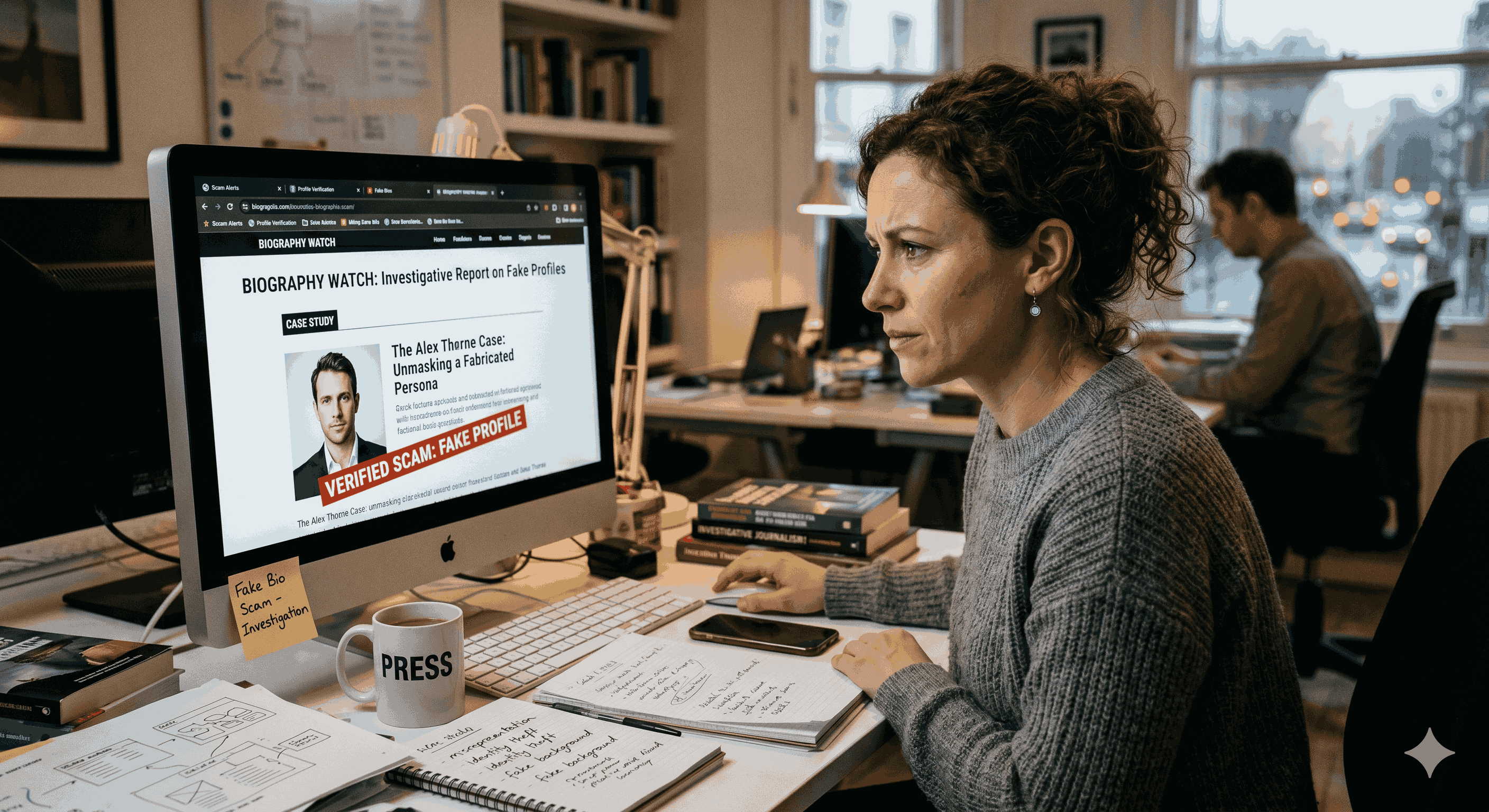
The moment a public figure dies, gets arrested, wins an Oscar, or simply goes viral for the wrong reason, a clock starts ticking. Not for grieving fans or curious readers — for a loose network of content farms that have figured out how to turn breaking news into a published "book" before the news cycle ends. We looked into how this works. It is more automated, more brazen, and more profitable than most readers realize.
The Anatomy of a Fake Biography
The operation typically starts with a news alert. A scraper tool — the same kind used by legitimate journalists to monitor headlines — flags a trending name. From there, the process barely requires a human decision. Web scrapers pull whatever is publicly available: Wikipedia articles, Reddit threads, celebrity gossip columns, old interview transcripts. It's shallow sourcing, but it's fast.
That raw material goes into a generative AI tool with a prompt along the lines of: "Write a 100-page biography of [Name] in an engaging, journalistic style." What comes back is grammatically passable and completely hollow — a regurgitation of surface-level facts stitched together with filler sentences. There are no interviews. No fact-checking. No original reporting. The "author" of record is usually a made-up name attached to an AI-generated profile photo. The cover is designed in Canva in under ten minutes. The whole package goes live on Amazon within a few hours of the original news event.
One researcher tracking this phenomenon documented over 60 fake biographies of a single recently deceased musician appearing on Amazon within 72 hours of the death announcement. Most were priced between $2.99 and $5.99. Several had hundreds of reviews — many of those also fake — before Amazon's moderation team removed them. Some were never removed at all.
The "Lookalike" Author Problem
Fake biographies are one issue. Fake authors are another, and arguably messier to fix. Some scammers don't bother inventing new names at all — they upload content under names nearly identical to real, working writers. "James Patterson" becomes "James D. Patterson." "Colleen Hoover" becomes "Coleen Hoover." One letter off, or a middle initial added, and the name sails past automated filters.
In documented cases reported by the Authors Guild in 2024, several midlist authors discovered that books they had never written were appearing on their Amazon author pages, mixed in with their real titles. Readers left one-star reviews on the actual books, assuming the author's quality had collapsed. One thriller writer described spending three months in correspondence with Amazon trying to get a fake title removed from her page — a title that had, in the meantime, generated royalties paid out to the scammer's account, not hers.
The financial damage is real but hard to measure. Lost royalties, reputation damage, and the time authors spend reporting these violations instead of writing — none of that shows up in any platform's public numbers. What does show up is the one-star reviews, which stay on legitimate books long after the fake ones are gone.
What Is the Industry Actually Doing?
Amazon announced in September 2023 that authors uploading to KDP must now disclose whether their content was AI-generated. The policy exists. Enforcement is a different story. The platform processes hundreds of thousands of new uploads every month, and the declaration is an honor system checkbox. Nobody verifies it before the book goes live.
Barnes & Noble Press has slightly stricter human review for new accounts, which partly explains why this problem is more concentrated on Amazon than elsewhere. Apple Books and Kobo have faced their own waves of AI-generated content, though their smaller market share makes them less of a primary target. Google Play Books pulled back its self-publishing program partly due to content quality issues, though it cited multiple reasons publicly.
The Authors Guild, the Science Fiction and Fantasy Writers Association, and several other professional bodies have sent formal letters to major platforms requesting stricter upload verification. As of early 2026, no major platform has implemented mandatory pre-publication review for self-published titles. The economics don't favor it: every rejected upload is a lost listing fee and potential royalty share.
It's worth saying plainly — this is not primarily an AI problem. AI is just the current tool. Before large language models, content farms used cheap overseas labor to write the same garbage manually. The underlying issue is that platforms profit from volume and have limited financial incentive to reduce it. That hasn't changed.
🛡️ How to Spot a Fake Book Before You Buy
- Check the publication date against the news cycle. If a biography of a celebrity who died last Tuesday was published last Wednesday, it wasn't written by a human who knew that person.
- Look at the publisher field. Legitimate memoirs and authorized biographies come from named publishers — Simon & Schuster, HarperCollins, Bloomsbury. "Independently Published" for a major celebrity life story is a red flag worth taking seriously.
- Read the free sample, slowly. AI-generated text has patterns: sentences that technically parse but say nothing specific, biographical details that read like a Wikipedia summary, and a strange flatness where personal details should be. Two or three pages is usually enough to tell.
- Click the author name and check the profile. Real authors have publication histories, author websites, social media presences, and interviews. A profile with one book, no bio, and a stock-looking headshot is worth treating with suspicion.
- Look at the one-star reviews, not the five-stars. Fake books attract bulk fake five-star reviews. The one-star reviews from actual buyers — "this is just a Wikipedia article reformatted," "I paid $4.99 for nothing" — tend to be honest and specific.
None of this is the reader's fault. These operations are specifically designed to exploit the trust people extend when they search for a book about someone they care about. Someone who just lost a favorite musician, or wants to understand a historical figure they read about — they're not approaching Amazon with suspicion. They shouldn't have to.
Reporting fake titles directly to the platform (Amazon has a report-a-concern option on every listing) does make a difference at the margins. Leaving accurate reviews that flag the content as AI-generated helps other readers. Buying from verified publishers and authors' official channels when possible keeps the money going to people who actually did the work. These are small actions, but they're the ones readers actually control right now — because the platforms, for all their stated concern, are still moving slowly.