
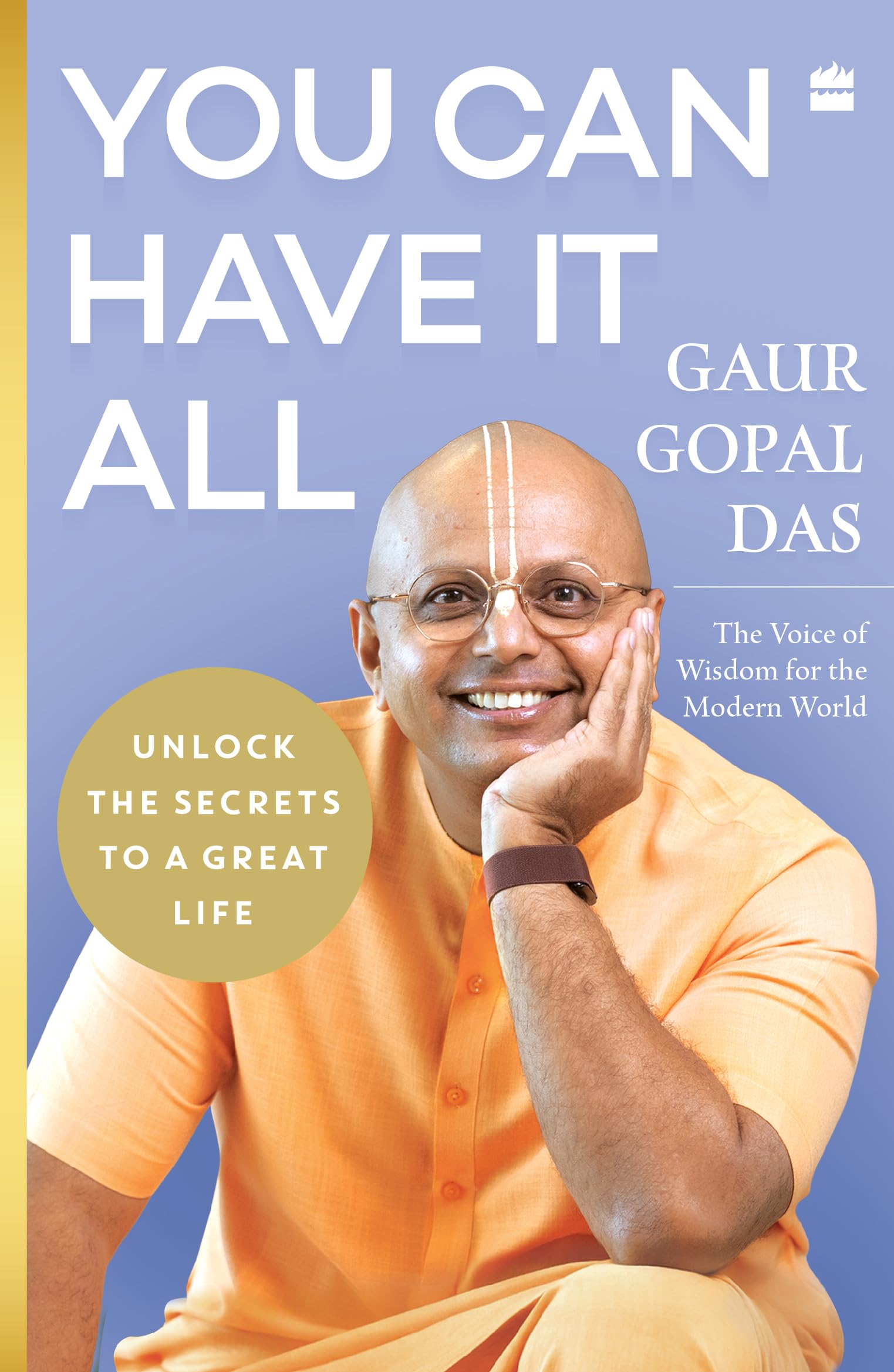
You Can Have It All: Unlock the Secrets to a Great Life
| Published | 2025-12-23 |
| Series | Standalone |
| Genre | Self-Help, Spiritual Wisdom |
| Language | English |
| Publisher | HarperCollins India / Harper Non Fiction |
| ISBN-10 | 9369891323 |
| ISBN-13 | 978-9369891320 |
📝Honest Review
That choice of structure is both the book's greatest strength and the thing that occasionally works against it. The wedding setting is richly observed. Jaisalmer as a backdrop has an atmospheric specificity that most spiritual writing tends to flatten into abstraction, and the Arora family and their various guests are drawn with enough distinctiveness that their struggles feel real rather than constructed to illustrate a point. When Gaur Gopal Das sits with a character who is paralyzed by the gap between what they have achieved and what they still want, or listens to someone whose pursuit of everything has cost them the one thing they actually valued, the book earns its insights through narrative rather than assertion. That is considerably harder to do than most authors attempting it realize, and he pulls it off more often than not.
The central idea of the book is also its most honest one. The title is deliberately provocative, because the book's actual argument is not that you can have everything simultaneously without cost or compromise. It is that most people are pursuing a version of having it all that someone else defined for them, chasing a shape of success that does not correspond to what they actually need in order to feel whole. The problem is not ambition. The problem is misaligned ambition, the kind that drives you toward goals that look like yours but are actually borrowed from someone else's expectations or fears. When Gaur Gopal Das writes about perspective reshaping reality, he is not offering the kind of fuzzy optimism that passes for wisdom in a lot of contemporary spiritual writing. He is making a more precise claim, that the life you are living looks entirely different depending on where you are standing when you look at it, and that most of us have never consciously chosen where to stand.
The book is warmest and most effective in the conversations where the gap between what a character says they want and what they reveal they actually feel is visible and unresolved. Gaur Gopal Das does not rush to fix these people. He listens, reflects back, asks the question slightly differently, waits. That quality of unhurried presence is genuinely rare in spiritual writing, which tends toward resolution rather than sitting in the discomfort of honest uncertainty, and it gives the book a texture that is calming without being saccharine.
Where it is less effective is in the sections where the narrative frame thins and the book slides toward more conventional self-help territory, making points in ways that feel designed to be quoted rather than inhabited. There are passages where the storytelling momentum stops and a lesson is delivered directly that would have landed harder if it had arrived through the narrative. And the resolution of the wedding conflict, while emotionally satisfying, is perhaps too neat for what the book has been building toward. Real family conflicts over marriage and money and belonging rarely resolve with the cleanness that fiction requires.
What the book ultimately offers is something that is genuinely useful and genuinely hard to find. Not a formula for success, not a set of habits to build, not a morning routine. Instead it offers a quieter invitation to stop and ask whether you have ever actually decided what having it all means for you specifically, in your specific life, with your specific values and fears and history. Most people have not. The book is, at its best, a gentle and persistent encouragement to begin that conversation with yourself.
Summary:
On a cool November morning, Gaur Gopal Das travels to Jaisalmer to attend the three-day wedding celebration of his friend Rakesh Arora's son. What begins as a festive gathering among families quickly becomes something more complicated when an unexpected visitor arrives and old tensions begin to surface, threatening to pull the two families apart before the ceremonies are even over. Through quiet conversations at the edges of the celebrations, through meals and late evenings and chance moments of honesty, Gaur Gopal Das listens to the people around him, to their unspoken fears and buried desires, to the versions of themselves they present to the world and the versions they hide from it, and offers the kind of counsel that is less about solving problems and more about shifting the perspective that created them. The central question running through the book is the one most of us spend our lives either chasing or avoiding: can we truly have it all? And what does having it all actually mean?
✅ What I Liked
The narrative structure built around a real wedding in Jaisalmer gives the book's ideas an authenticity and specificity that most self-help writing lacks entirely. Gaur Gopal Das's central argument, that the question is not whether you can have it all but whether you have ever defined what having it all actually means for you, is both simple and genuinely insightful. His quality of listening rather than fixing, of sitting in complexity rather than rushing toward resolution, makes the book calming in a way that does not feel dishonest. And the setting is beautifully evoked.
❌ What Could Be Better
There are sections where the book steps out of its narrative frame and delivers its ideas in a more conventional self-help register, and the shift in tone is noticeable and occasionally jarring. The resolution of the family conflict at the wedding is slightly too clean for what the book has been honestly wrestling with. And readers looking for practical frameworks or structured exercises will find this book less immediately actionable than Gaur Gopal Das's previous work.
Discover Your Next Great Read
Handpicked recommendations from our collection of literary treasures










💬Discussions