i want to start by saying that i used to be one of those people who insisted that audiobooks did not count as reading. i held that position for longer than i should have and i was wrong about it. reading with your eyes and listening with your ears are different experiences but they are both genuinely engaging with a book and anyone who tells you otherwise is being a snob about something that does not deserve snobbery.
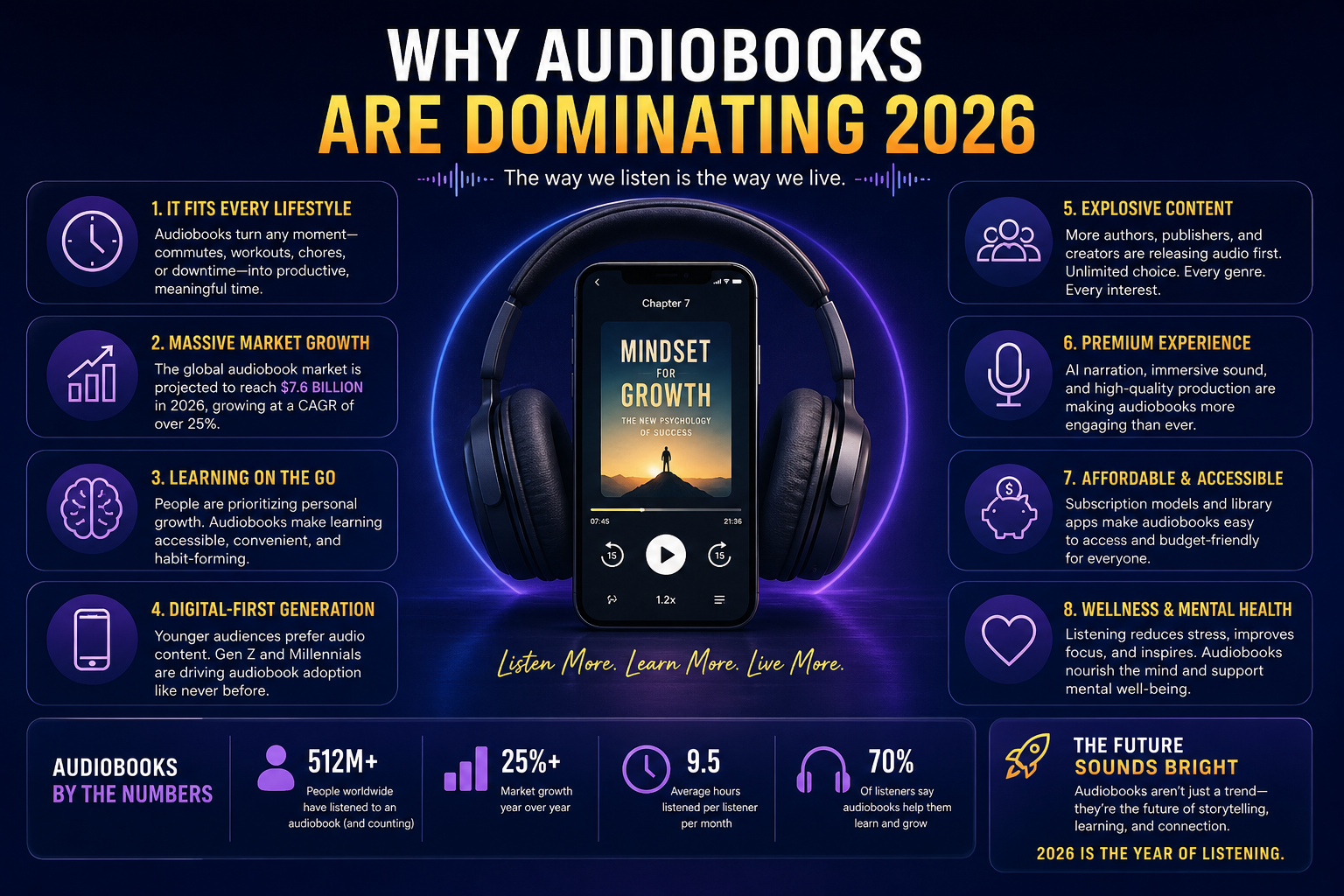
i mention this because i think a lot of people who have not tried audiobooks seriously are in the same place i used to be. they think of it as the lazy option or the option for people who do not have time for real reading. but the numbers for 2026 make a pretty compelling case that something more interesting than laziness is driving this growth. audiobook revenue has broken records again this year. the number of new titles released in audio has gone up significantly. and some of the most talked about releases of the year have been audio-first or audio-native projects that were built for listening from the start.
so i want to talk about why this is happening and what i think is genuinely worth listening to right now. not just the bestseller list but the audiobooks where the format is actually doing something that the printed page cannot quite replicate.
📈
Growth
Record revenue for audiobooks in 2026
🎙️
New titles
More audio releases than any previous year
🏆
Top genre
Romance and thriller leading growth
👥
Listeners
Over 35 percent of adults listen monthly
📱
How they listen
Mostly phone while doing other things
🌍
Where growth is
South Asia and Africa growing fastest
the thing about a great audiobook narrator is that they do not read a book to you. they perform it. and a performance of a book you love is its own kind of thing entirely.
what changed my mind about audiobooks after years of being dismissive of them
14yr
consecutive years of audiobook revenue growth in the US market alone
67K+
new audiobook titles produced in 2025, up from 44K in 2020
1 in 3
adults in the UK and US now listens to at least one audiobook per year
8hrs
average time a listener spends with audiobooks per week in 2026
📊 Why This Is Happening Right Now
the growth is real but the reasons behind it are more interesting than just "people are busy." here is what i actually think is driving it.
1
phones made audiobooks genuinely frictionless
before smartphones audiobooks were a hassle. CDs you had to carry around. downloaded files you had to manage and transfer and keep track of. the experience was clunky enough that only dedicated listeners bothered. now a single app on your phone gives you instant access to hundreds of thousands of titles and you can pick up exactly where you left off whether you are on your morning walk or washing up after dinner. that friction reduction is not a small thing. it is probably the biggest single factor in why audiobooks went from a niche product to a mainstream habit within about ten years.
2
people found time they did not know they had
one of the most common things i hear from people who got into audiobooks is some version of "i do not have time to read but i commute for an hour each way." that hour each way is two hours a day. at average audiobook listening speeds that is roughly one book every two weeks without changing anything about your life except what you put in your ears on the train. the same logic applies to gym time cooking cleaning long drives anything where your eyes and hands are occupied but your brain has spare capacity. audiobooks found all that dead time and turned it into reading time and once people discovered that they did not want to go back.
3
the quality of narration has gone up enormously
this one gets talked about less but i think it matters a lot. ten or fifteen years ago a lot of audiobooks were narrated by whoever was cheapest or most available and the results ranged from fine to genuinely unpleasant to listen to. that has changed. publishers are now investing properly in narration and there is a generation of professional audiobook narrators who are genuinely excellent at what they do. some of them are better known in certain reading communities than many authors. a great narrator does not just read the words correctly. they understand the rhythm and the emotional arc of a book and they shape the performance around it. when that works well you get something that a printed book simply cannot give you.
4
certain genres are discovering that audio is their natural home
romance has always done well in audio for reasons that feel obvious in retrospect. the intimacy of having someone's voice in your ear telling you a love story is a different experience from reading the same story on a page and for a lot of readers it is a better one. thriller and crime fiction also translate brilliantly because the pacing is driven by dialogue and tension and a good narrator can push both of those things in ways the text alone cannot. horror is becoming one of the fastest growing audio genres for similar reasons. there is something genuinely unsettling about a horror story told in a quiet voice directly into your ears in the dark that no printed book has quite replicated.
5
accessibility brought in readers that print had been leaving out
this is the part of the audiobook story that i think is most genuinely important and gets the least attention in conversations about the market. for people with dyslexia, visual impairments, ADHD, or any of a dozen other conditions that make sustained silent reading difficult, audiobooks are not a secondary option. they are the primary one. the growth of the audiobook market has brought a huge number of readers into book culture who had largely been excluded from it by the assumption that books meant printed pages. that is not a minor footnote. that is a meaningful expansion of who gets to be a reader and i think the industry should be more openly proud of it than it tends to be.
audiobooks did not make reading easier. they made it possible for people whose lives or bodies make traditional reading difficult. that is a much more important thing than a convenience upgrade.
🎧 What i Actually Think You Should Listen To Right Now
these are not necessarily the bestselling audiobooks of 2026. they are the ones where i think the audio format adds something real. i have tried to cover a range of genres so there is something here whatever kind of listener you are.
Fantasy Romance
21 hours
Epic and emotional
i know this one has been everywhere for the past couple of years but i am recommending it specifically in audio because i think that is the best way to experience it. the narration handles the dual timeline and the shifting emotional register of the story in a way that i found easier to follow than the print version. the romance elements land harder when you are hearing the dialogue rather than reading it and the fantasy world building feels more immersive. if you tried the print version and bounced off it in the first hundred pages i would genuinely suggest trying the audio before you decide it is not for you.
this is the book i would put on for someone who says they want to get into fantasy but does not know where to start. the audio makes the entry point much gentler.
Literary Fiction
19 hours
Devastating and brilliant
Pulitzer Prize winner and one of the best audiobooks i have heard in several years. it is a retelling of David Copperfield set in the opioid crisis in Appalachian America and the narration by Charlie Thurston is extraordinary. the first person voice of Demon is so specific and so alive that it almost feels wrong to call it narration. it feels like listening to someone tell you their own story. the Appalachian dialect and cadence of the prose is something the audio captures in a way that i think printed text struggles to convey fully. this is the kind of audiobook that changes your mind about what the format can do.
if you only listen to one literary fiction audiobook this year make it this one. the narration alone is worth the time.
Crime Thriller
15 hours
Tense and quietly scary
Stephen King in audio has always worked well because his prose has a spoken quality to it already. he writes the way people actually talk and think and that translates naturally into the listening experience. Holly is his most recent Holly Gibney novel and it is also one of the best things he has written in a long time. the villainy in this book is ordinary in a way that is more unsettling than anything supernatural he has written recently and hearing that ordinariness in audio makes it land harder. the narration is careful and unhurried and it suits the tone of the book exactly.
good for commutes because each chapter is short enough to feel like progress and long enough to pull you properly in before you have to stop.
Self Help
5 hours 35 mins
Practical and motivating
i am aware this has been on every list for five years and i do not care. it belongs here because nonfiction and self help specifically is a category where audio genuinely works better for a lot of people than print. the reason is simple. when you read a self help book you can skim. when you listen to one you stay with it at the pace it was meant to be absorbed at. Clear narrates this himself and that matters because the conversational quality of his writing is exactly what you want to hear rather than read. at under six hours it fits into a week of commutes and you come out of it actually thinking about your habits differently which is the whole point.
if you have had this on your list for years and never got around to it just listen to it. you will finish it this week.
Historical Fiction
26 hours
Rich and immersive
a multigenerational family saga set in South India spanning most of the twentieth century. Verghese is a physician as well as a novelist and the medical detail in this book is exact in a way that adds real weight to the story rather than slowing it down. the audio is narrated by Soneela Nankani and it is one of the best narrations of recent years. the South Indian names and places and cultural details are handled with care and confidence and that makes a real difference to how you receive the story. at 26 hours this is a long commitment but it is the kind of book you do not want to end and the audio makes the length feel like a gift rather than a task.
good for a long holiday or a period when you have a lot of travel coming up. you will want the time to be with it properly.
Literary Fiction
14 hours
Quiet and interior
Rooney's prose is interior in a way that can feel slow in print but in audio it becomes something else. the internal monologue of her characters, the way they think around a feeling rather than directly at it, works brilliantly when it is being spoken rather than read. Intermezzo follows two brothers grieving their father and moving through their own complicated emotional lives and the dual narration mirrors the dual perspective of the novel in a way that feels completely intentional. i found this harder to read than to listen to and i think that is an interesting data point about what the audio format can do with certain kinds of prose.
if Rooney has not worked for you in print i would genuinely suggest trying this one in audio. it is a different experience.
🎯 If You Are New to This — How to Actually Get Started
the most common reason people try audiobooks and give up is that they started with the wrong book or the wrong setup. here is what i would tell a friend who wanted to get into it.
1
start with something you already know and love
the biggest mistake new audiobook listeners make is starting with something new and unfamiliar. your brain is already doing work learning to process audio rather than text and adding an unfamiliar story or world on top of that is too much at once. pick a book you have read and loved and listen to that first. you already know what happens so you can focus on getting used to the listening experience. once that feels natural move on to something new.
2
the narrator matters as much as the book
a great book with a bad narrator is almost unlistenable. before you commit to a long audiobook listen to the sample on whatever platform you are using. most platforms give you five or ten minutes free. if the narrator's voice or pace bothers you in the sample it will bother you for twenty hours. it is not being fussy. it is just saving yourself time. conversely a narrator you love can make a book you might have abandoned in print into something you finish happily.
3
speed up slightly once you are comfortable
most audiobook apps let you adjust the playback speed and this is something most new listeners do not try soon enough. standard speed sounds natural at first but after a few hours many people find it a bit slower than their natural reading pace. try 1.1x or 1.2x once you have been listening for a few sessions. a lot of regular audiobook listeners settle somewhere between 1.25x and 1.5x. it sounds odd when you first try it but your brain adjusts faster than you expect and suddenly you can get through books much more quickly without feeling like you missed anything.
4
find your listening activity and stick to it
audiobooks work best when they are paired with an activity that occupies your hands and body but not your full attention. commuting walking cooking cleaning ironing driving long distances. the people who stick with audiobooks usually have one primary activity they associate with listening and they look forward to that activity specifically because it means they get to continue their book. if you try to listen while working or doing something that requires real concentration you will miss chunks and feel lost and give up. find the right activity first and the habit builds itself.
5
Libby is free and most people do not know about it
if you have a public library card in the UK US Canada Australia or many other countries you have free access to Libby which is an app that lets you borrow audiobooks and ebooks from your local library at no cost. the catalogue is enormous and growing. you may have to wait for popular titles but for backlist books and anything that has been out for more than a year the wait times are usually short. before you sign up for a paid audiobook subscription i would always say check Libby first. it is genuinely one of the best free things available to readers right now and it is wildly underused.
📌 a quick note on audiobooks and whether they count as reading
research on this has been pretty consistent for a while now. comprehension and retention from audiobooks is broadly comparable to reading for most people and in some contexts particularly for complex nonfiction listening actually produces better comprehension than reading because the pacing is controlled by the narrator rather than the reader who might rush. the short answer is yes they count. the longer answer is that the question itself is not very interesting and you should just read or listen to whatever helps you engage with more books.
🎧 Find Your Next Audiobook in Our Library
we have thousands of titles across every genre ready for you right now. no sign up needed and no cost. just press play.
Browse the Free Library →